Unity Project
Nuclear Engineering Lab Simulator
A high-fidelity Unity-based nuclear reactor simulator for operator training and research, featuring real-time interaction and physics-informed reactor kinetics.
TL;DR
A real-time nuclear reactor simulator built in Unity for operator training and research, combining interactive 3D visualization with physically accurate reactor kinetics computed via MATLAB integration.
Purpose
Traditional nuclear engineering education relies heavily on:
- static diagrams
- offline numerical simulations
- limited-access physical labs
This simulator aims to bridge that gap by providing an interactive, real-time simulation environment where users can:
- visualize reactor behavior
- manipulate operational parameters
- observe system response immediately
The simulator is designed for both training and research analysis.
Project Context
This project was developed in collaboration with nuclear engineering researchers and deployed in two forms:
- Desktop application (Windows)
- Web-based application
It supports instructional use in academic environments and exploratory analysis by researchers.
Methodology
1) Unity-based real-time simulation framework
Unity was used as the core platform to:
- render interactive 3D lab environments
- manage user input and UI
- synchronize simulation state with visual feedback
Real-time game development techniques ensure smooth interaction while maintaining responsiveness under continuous simulation updates.
2) Physics-informed reactor modeling
Accurate reactor behavior is critical. To achieve this:
- Complex numerical calculations (e.g., point kinetics algorithms) are handled via MATLAB integration
- MATLAB computes reactor state evolution based on control inputs
- Unity acts as the real-time visualization and interaction layer
This separation allows:
- high numerical accuracy
- rapid iteration on visualization and UI
- clean integration between scientific computation and interactive graphics
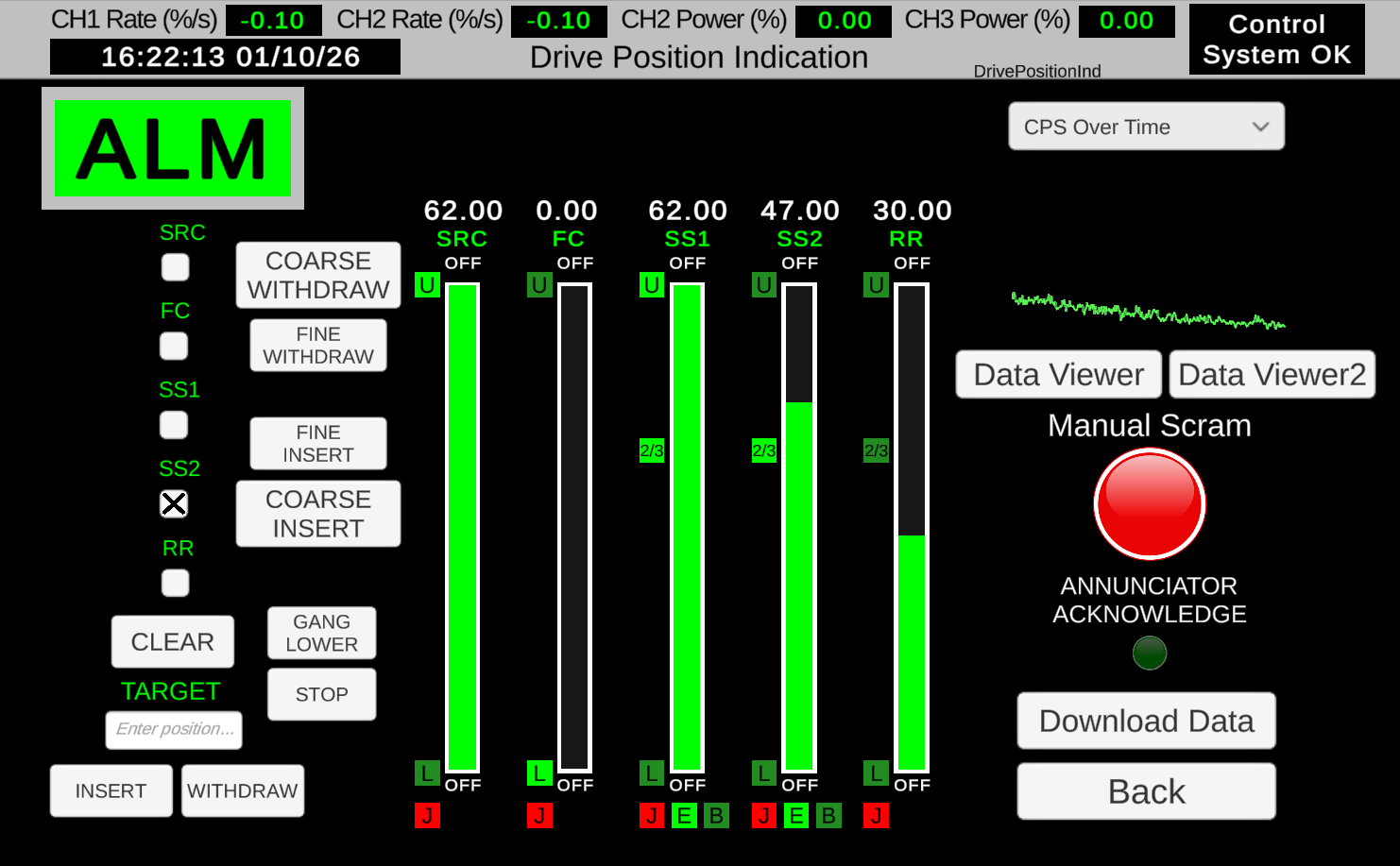
3) Interactive operator controls
Users can interact with the simulated reactor by:
- adjusting control parameters
- triggering operational changes
- observing immediate system response
This mirrors real operator workflows and reinforces cause–effect understanding.
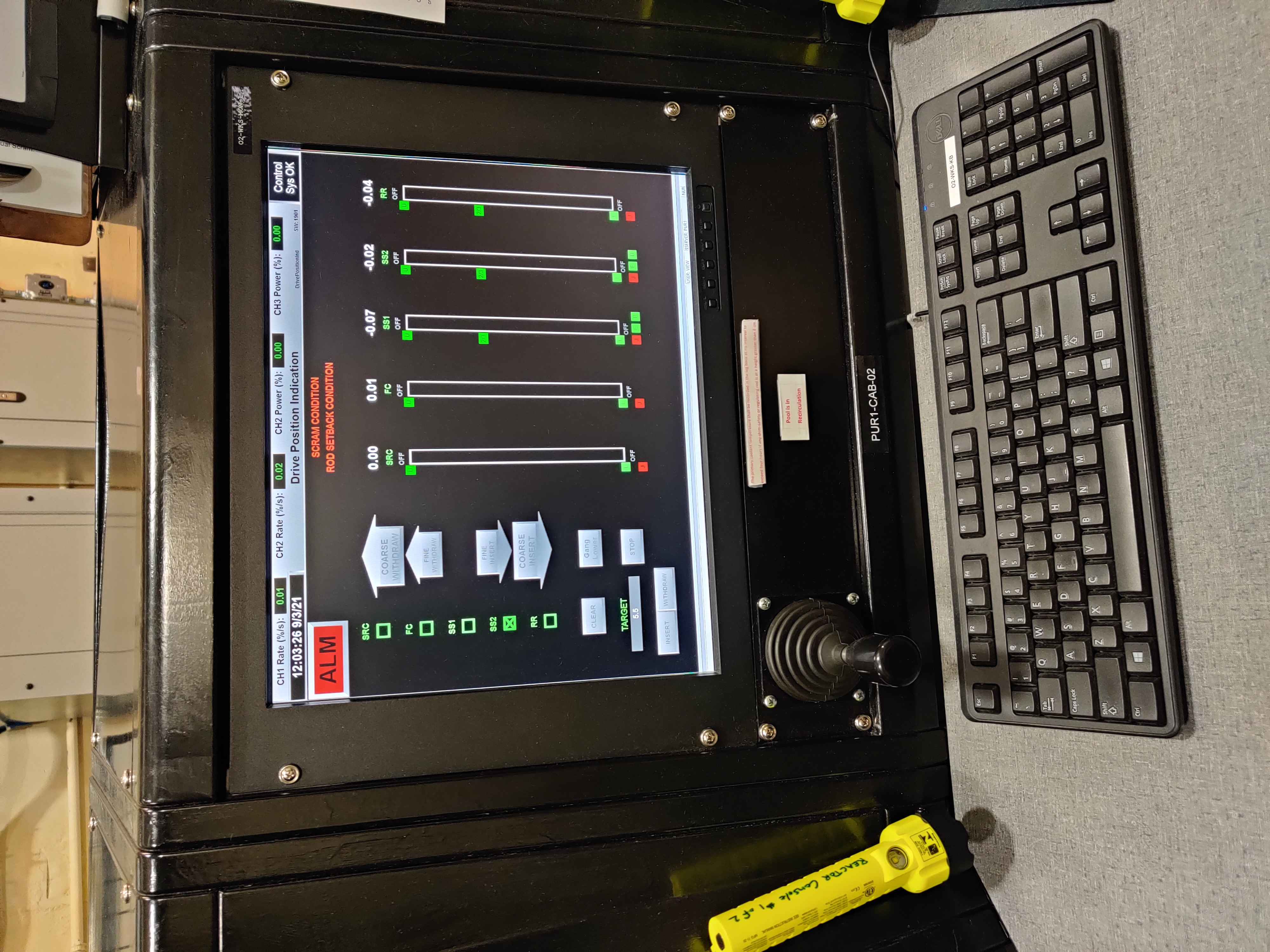
Comparison between the actual reactor screen and Unity-built simulation
4) Cross-platform deployment
The simulator was deployed as:
- a Windows application for local training and demonstrations
- a web application for broader accessibility
This dual-deployment approach increases adoption and lowers barriers for instructional use.
Dissemination & Collaboration
This work was presented at:
- NESTet
- ANS CONTE
Impact
- Enhances nuclear engineering education through interactive visualization
- Bridges game technology with scientific simulation
- Demonstrates the use of real-time graphics as a serious research and training tool
Role
Unity Programmer & Research Assistant
Responsible for:
- real-time simulation integration
- UI/UX design
- Unity implementation and deployment
- collaboration with nuclear engineering researchers