Unity Project
Chemistry Online Lab
A photorealistic Unity-based online chemistry lab for teaching foundational laboratory skills such as meniscus reading and spectrophotometer operation, used by over 500 students.
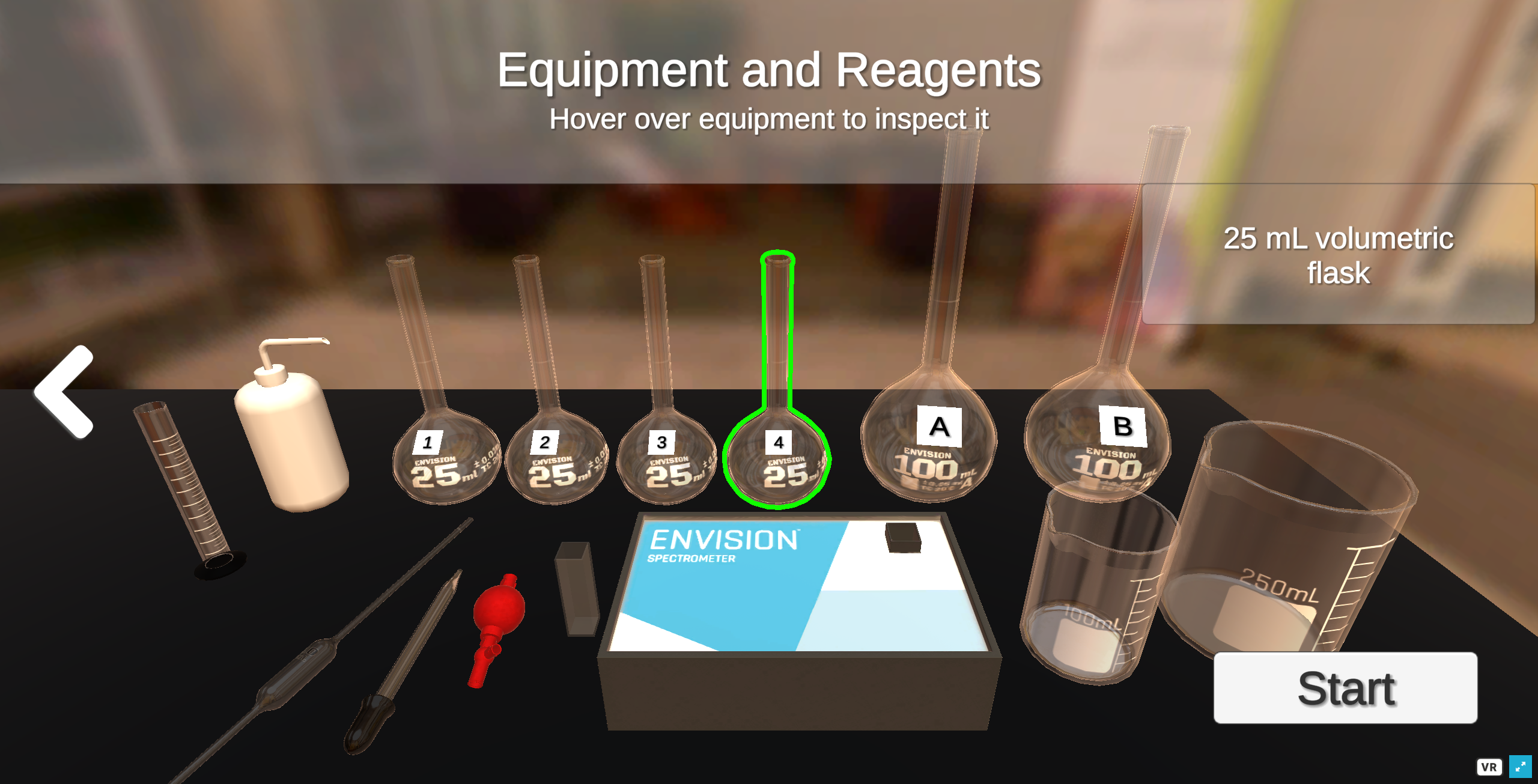
TL;DR
A web-based, photorealistic chemistry lab simulator built in Unity to teach essential laboratory techniques—most notably accurate meniscus reading—successfully used by 500+ students for remote and supplemental lab training.
Purpose
Introductory chemistry students often struggle with fundamental lab skills due to:
- limited physical lab access
- time pressure during in-person labs
- lack of visual clarity when learning precise techniques
This project was designed to provide a high-fidelity, repeatable training environment that allows students to practice critical lab operations before entering a physical lab.
Educational Context
The simulator was deployed as part of an online learning workflow, supporting:
- remote instruction
- pre-lab preparation
- skill reinforcement outside scheduled lab hours
Its design prioritizes clarity, realism, and instructional accuracy over gamification.
Methodology
1) Photorealistic 3D visualization
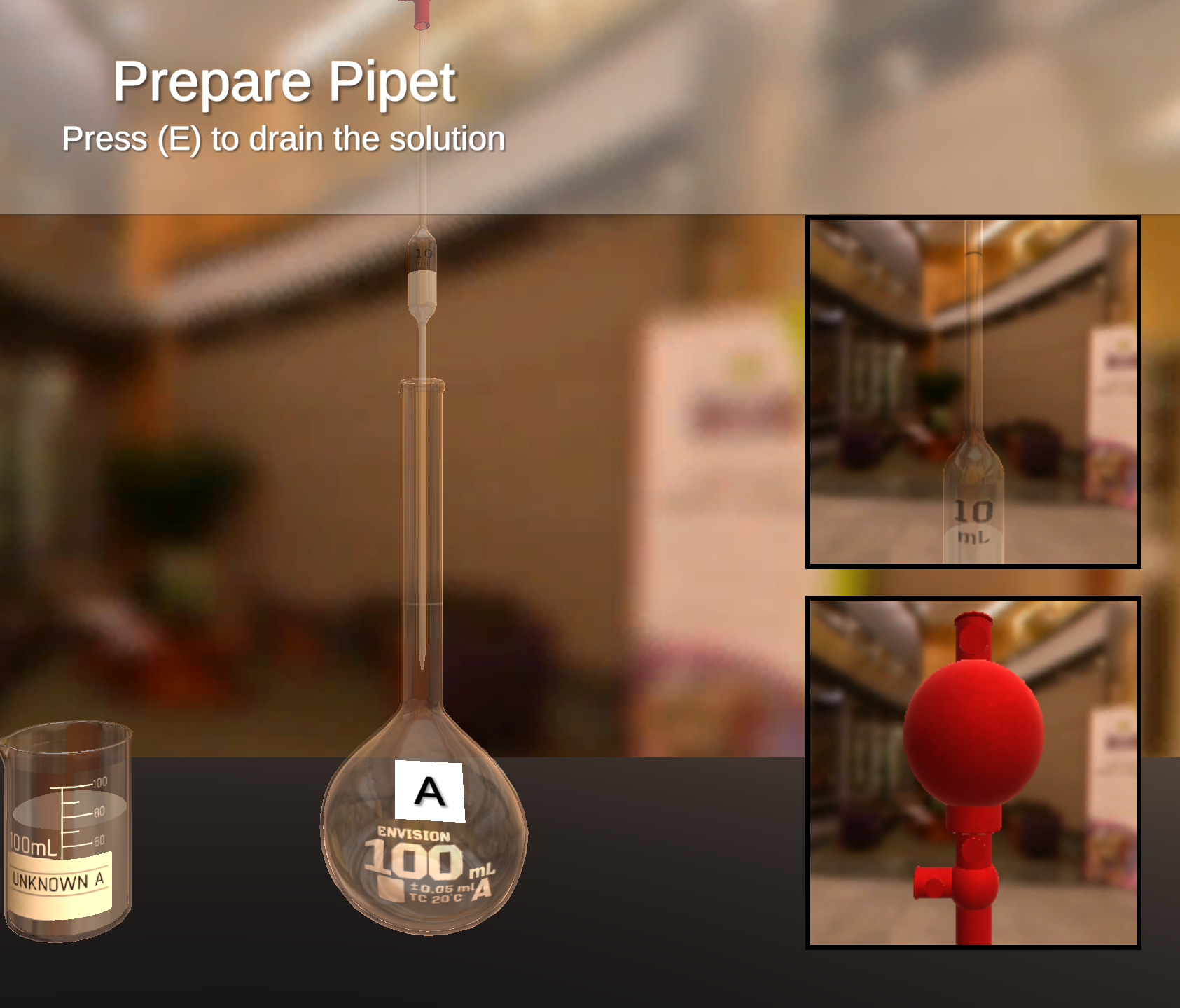
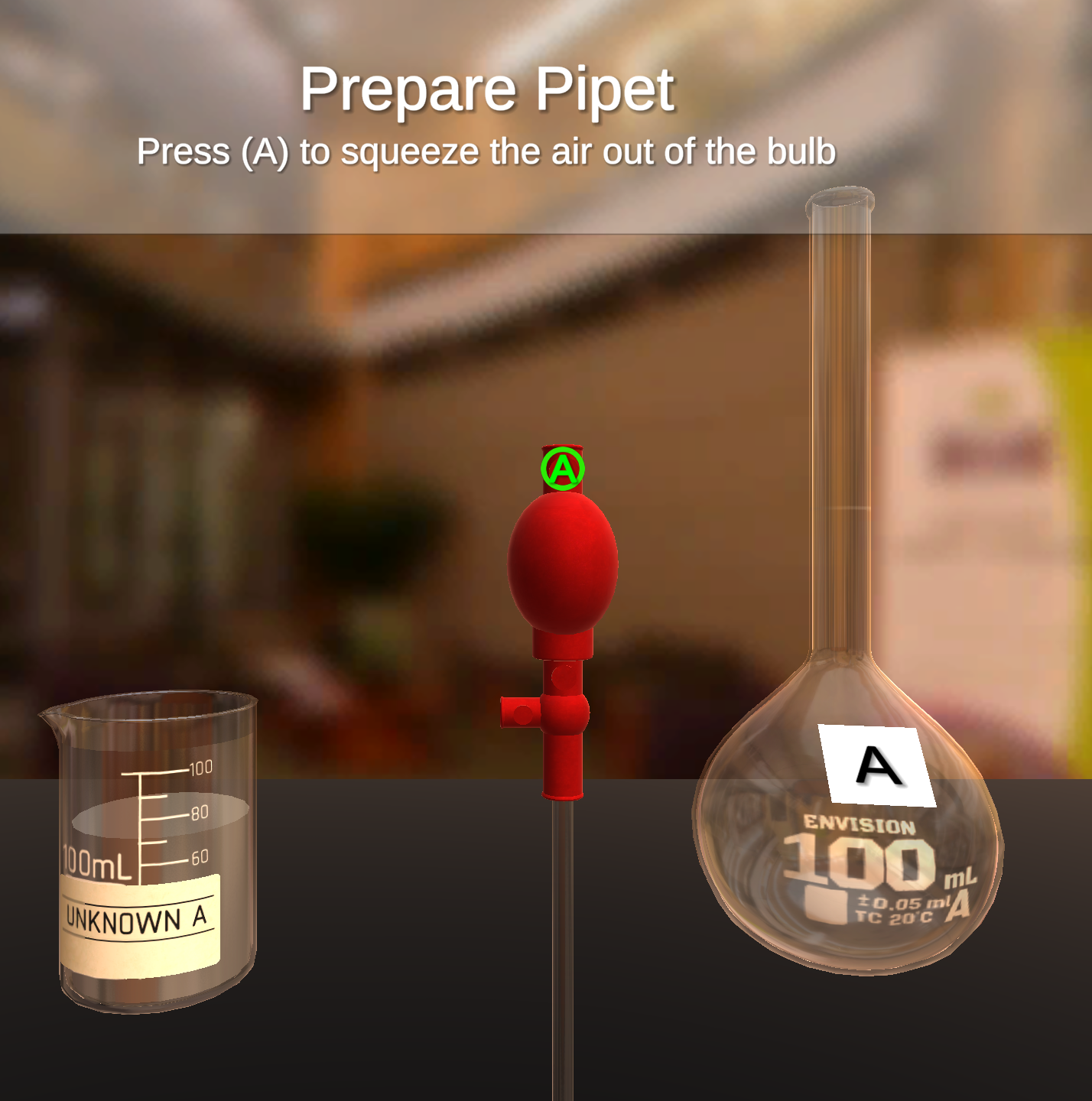
Unity was used to create accurate, photorealistic models of laboratory glassware and instruments, with particular focus on:
- transparent materials
- liquid surface curvature
- lighting conditions that affect visual perception
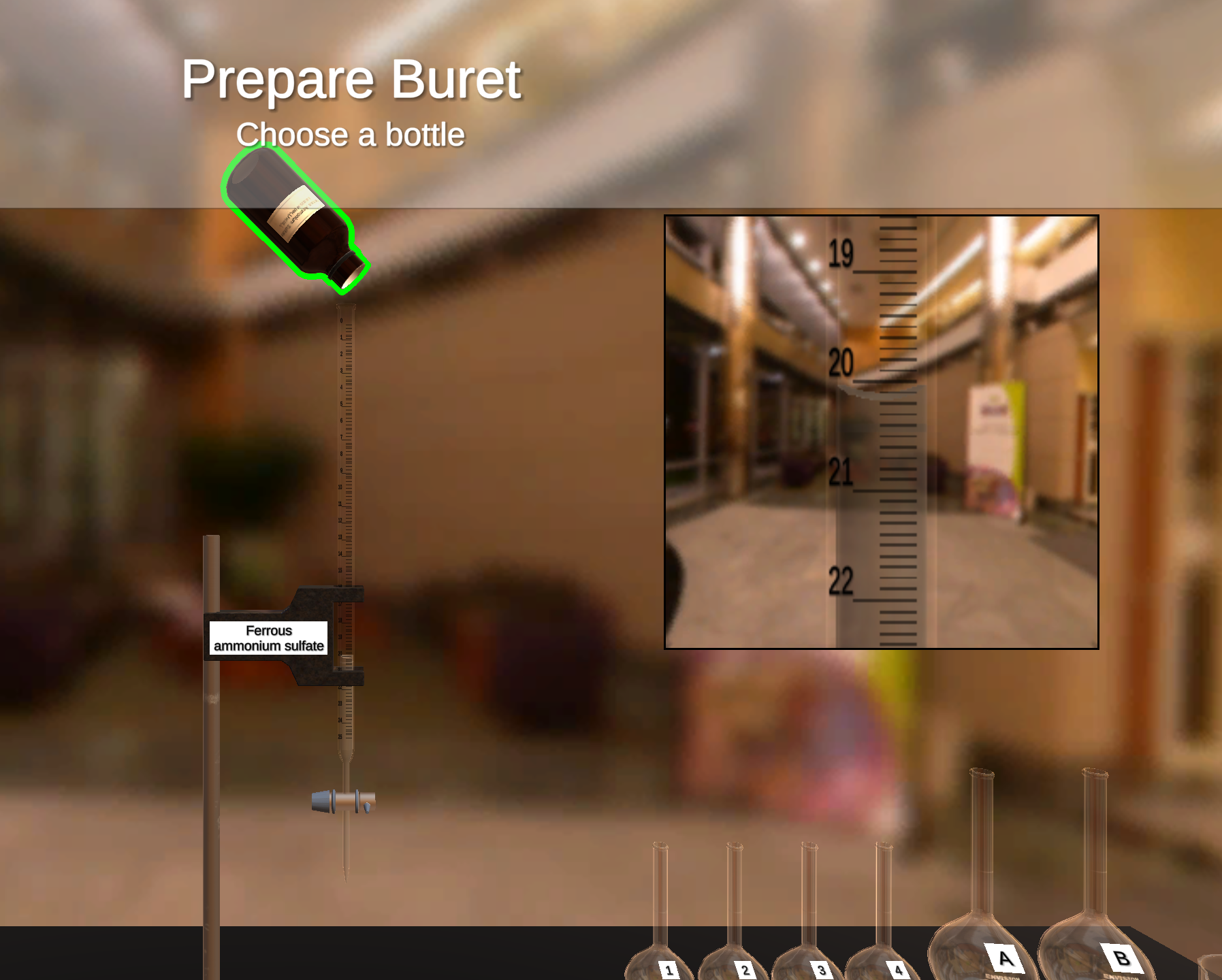
This visual fidelity is essential for correctly teaching meniscus reading, a skill that depends on subtle optical cues.
2) Meniscus reading training
The simulator guides students through:
- identifying the correct eye level
- recognizing concave vs convex meniscus shapes
- reading volume measurements accurately from glassware
Students can repeat the process multiple times, reinforcing correct technique through visual repetition rather than trial-and-error in a real lab.
3) Integrated lab procedures
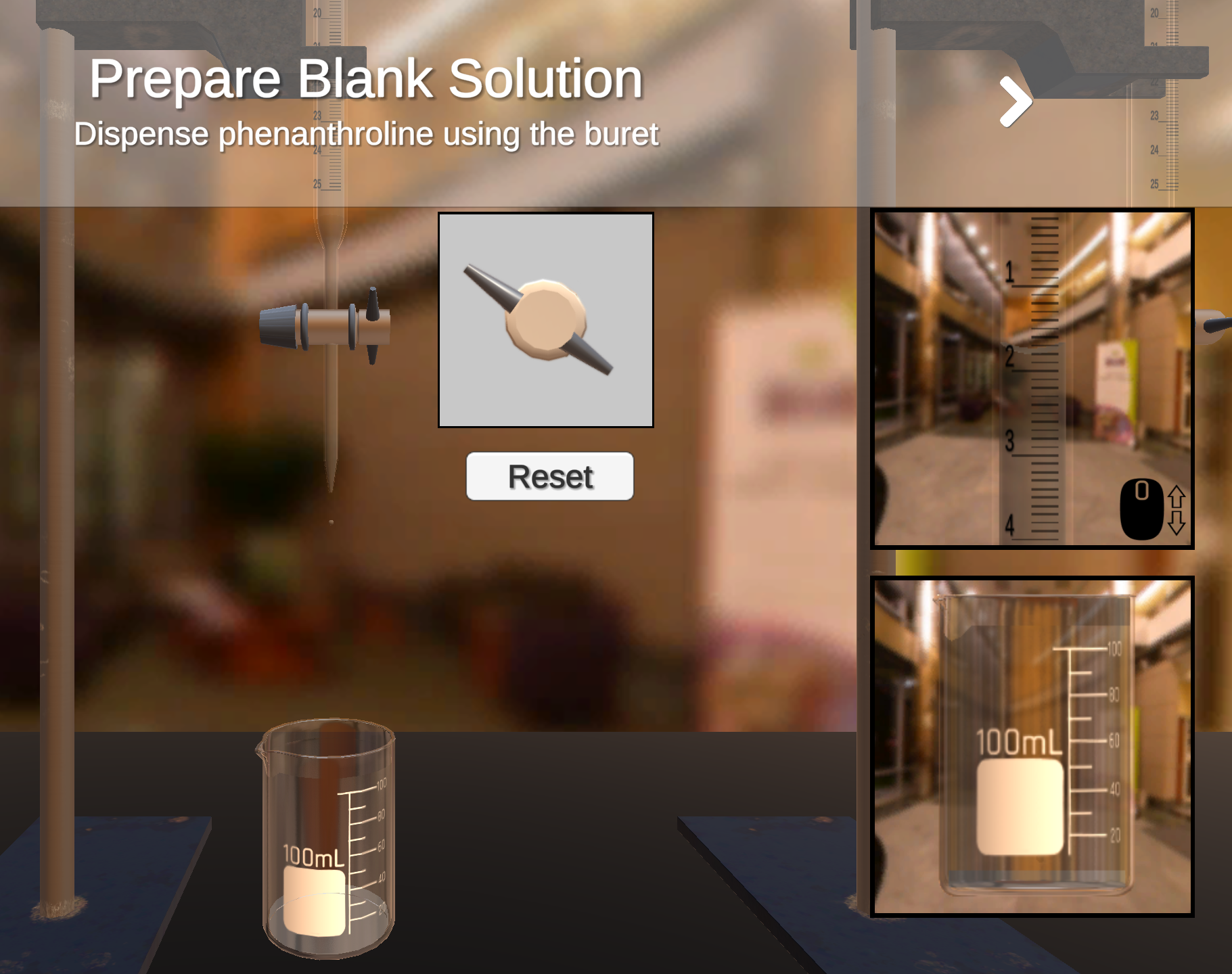
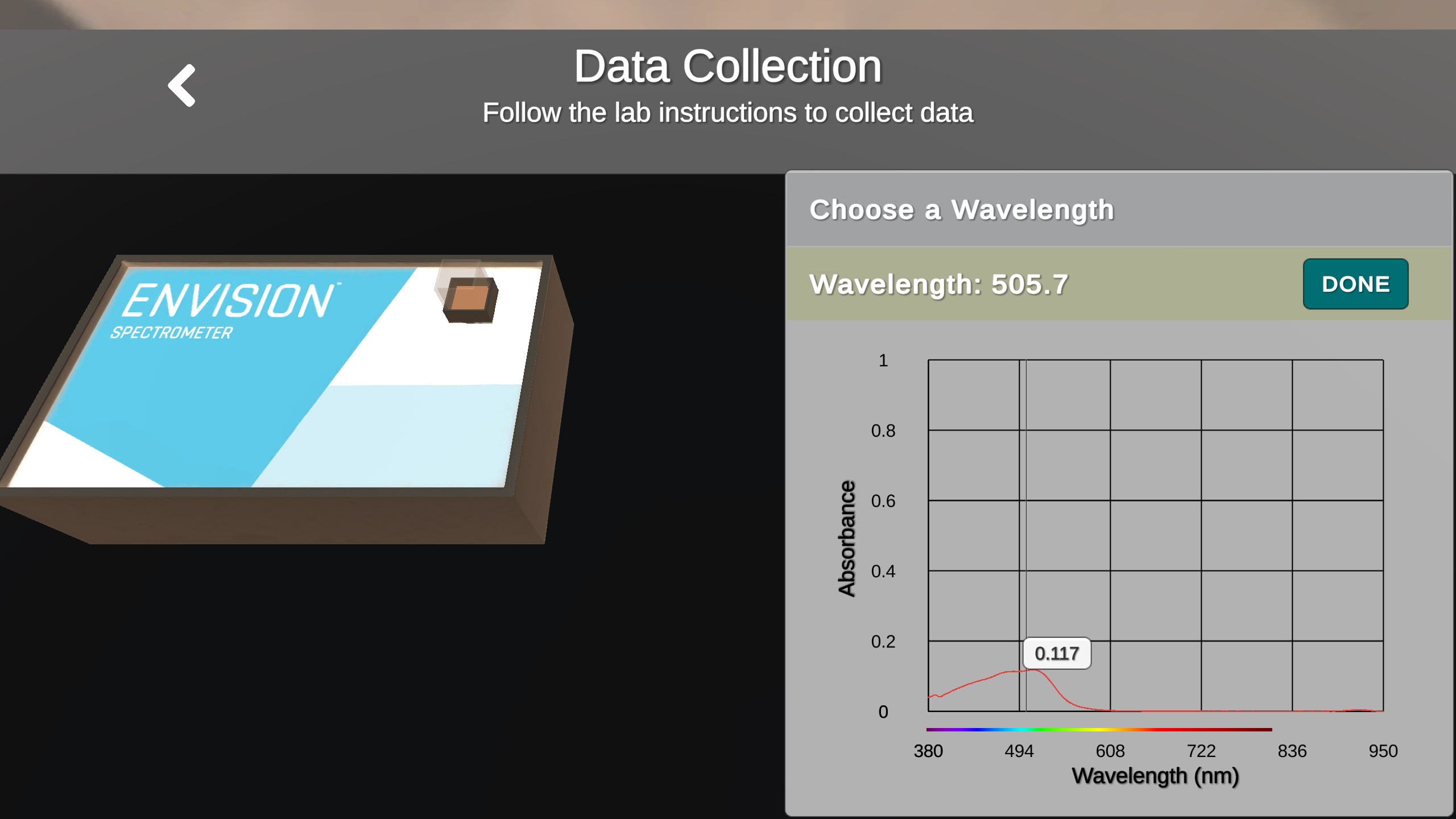
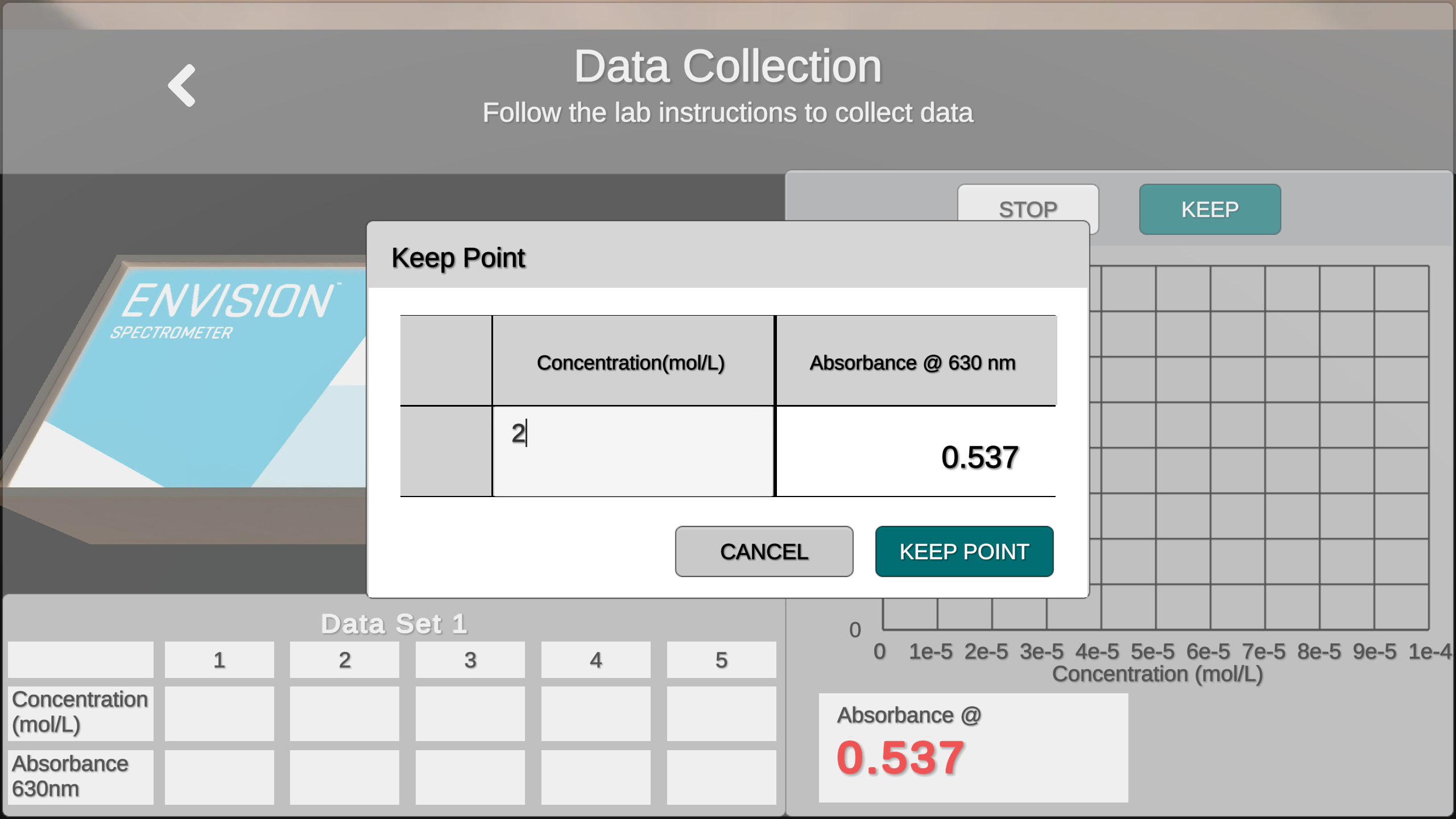
Beyond meniscus reading, the simulator integrates full procedural workflows, including:
- spectrophotometer operation
- burette handling and measurement
- step-by-step experimental processes
This allows students to understand how individual techniques fit into broader lab experiments.
4) Web-based deployment
The lab was deployed as a web application, making it:
- easily accessible without local installation
- compatible with remote learning environments
- scalable to large student populations
This deployment choice significantly lowered barriers to adoption.
Results & Impact
- Successfully used by 500+ students
- Improved student confidence with basic lab operations
- Reduced time spent in physical labs correcting foundational mistakes
- Enabled consistent instruction across large course sections
Instructors reported smoother lab sessions due to students arriving better prepared.
Role
Unity Developer
Responsibilities included:
- photorealistic 3D environment creation
- interaction design and procedural flow
- web deployment and optimization for student use
Takeaway
This project demonstrates how real-time 3D simulation can be applied beyond games to deliver measurable educational impact, especially in environments where physical resources are limited.